top of page
KAINAAT STUDIOS
HOME
KAINAAT VIDEOS
URDU VIDEOS
ENGLISH VIDEOS
KAINAAT KIDS
ABOUT
ENGAGEMENT
PROJECTS
ECLIPSE CAMPAIGN
AMBASSADORS
DONATE
CONTACT
More
Use tab to navigate through the menu items.
ENGLISH VIDEOS
Kainaat Astronomy in English
Subscribe Now!
Subscribe
Conversations about science, ethics, and society in collaboration with NPR/NEPM and IAU-OAO.
Chai on the Moon
Play Video
Play Video
45:15
Dr. Hilding Neilson: An Indigenous Perspective On Human Presence on the Moon | Chai on the Moon
🌕 The Moon’s Future in Balance: What Indigenous Knowledge Can Teach Us About Tomorrow Humanity is standing at a crossroads. As commercial pressures mount, from lunar mining to resource extraction to competing national interests, the future of the Moon feels more contested than ever. But what if the key to shaping a healthier, more ethical lunar future lies in knowledge systems, far older than space exploration itself? In this thought-provoking episode of Chai on the Moon, astrophysicist and host Dr. Salman Hameed sits down with Professor Hilding Neilson, a Mi’kmaw astronomer whose work bridges astrophysics, Indigenous knowledge, and new models of kinship for our relationship with the cosmos. Together, they explore how Indigenous worldviews may offer pathways for imagining a more responsible, relational future for humanity in outer space. ☕ Episode Overview - Dr. Salman Hameed and Professor Hilding Neilson discuss: - Why the Moon’s future is at a critical turning point - How commercial, political, and scientific interests are reshaping lunar priorities - What Indigenous methodologies offer that Western frameworks often miss - Whether new models of kinship can reshape how humanity approaches space - How this reimagining might guide the future of life beyond Earth 00:00 Introduction of "Chai on the Moon with Prof. Hilding Neilson 01:45 Indigenous Perspective on the Moon Exploration 06:30 What would be another way to protect our night skies? 09:25 Why space exploration should not be left to a few powerful nations? 11:02 How have indigenous people been neglected by the astronomy community? 14:50 Indigenous people have been compared to minority stakeholders by IAU, not as sovereign independent nations. 19:31 Moon as a National Park; what issue can arise from that? 24:25 What model can be used to govern the Moon? 30:50 How can we rethink and be anti-colonial about space? 34:20 How do we, so diverse people of the Earth to collectively think about the Moon? 40:31 How does exploration on the moon look like with an alternative view? 🎙 About Our Guest: Dr. Neilson is an interdisciplinary astrophysicist and a member of the Mi’kmaq community. His research bridges stellar physics with Indigenous knowledge systems, bringing forward new ways of understanding stars, the Universe, and humanity’s place within it. His scientific work focuses on stellar winds and the environments surrounding stars, while his broader scholarship examines how Indigenous methodologies can reshape astronomy, cosmology, and our future in space. 📄 Featured Work Indigenous knowledges and kinship as a model for our future in outer space Hilding Neilson (2024), accepted for publication in "Astronomy and Satellite Constellations: Pathways Forward", proceedings of IAU Symposium 385 https://arxiv.org/abs/2412.06669 👨🚀 About the Host: Dr. Salman Hameed holds a PhD in astronomy and serves as the Charles Taylor Chair and Professor of Integrated Science & Humanities at Hampshire College. He is also a faculty member of the Five College Astronomy Department (FCAD) in Massachusetts, USA. Beyond academia, he is the CEO of Kainaat Studios, a non-profit dedicated to science communication and outreach. 🌌✨ #moon #apollo11 #nasa #documentary #podcast #lunar #astronomynews #astronomyadventures #astronomy #pakistan #southasia #space #spaceexploration #spacerace #spacex #interview #nonprofit #spacelaw #humanfuture #isro #spaceethics Subscribe to our NEW Kids English Channel here: https://www.youtube.com/@UCdIRtt8-Og1q99bkK5XBhoQ Subscribe to our Kids Urdu Channel here: https://www.youtube.com/@UCDt7wgStPBzuxtcAf2qqnkg Subscribe to our Urdu Channel here: https://www.youtube.com/@UClJlxaRQLPsx0gPIHgIZffw For more information about Kainaat Studios: https://www.kainaatstudios.com/ Sign up to our mailing list to get unseen content and hear special announcements! https://www.kainaatstudios.com/newsletter Follow us for more: Facebook https://www.facebook.com/kainaatstudios Twitter https://twitter.com/KainaatStudios Instagram https://www.instagram.com/kainaatstudios/ TikTok https://www.tiktok.com/@kainaatstudios LinkedIn https://www.linkedin.com/company/kainaat Credits: Written & Hosted by: Salman Hameed Edited by: Shehryar Shaikh Music: “Kainaat” by Umer Piracha Subtitles by: DigiCircle Galactic Orbiters (Founding Supporters): Sahr Foundation, Dr. Zafar Iqbal & Dr. Mehr Iqbal, Qazi Family Foundation and PixelEdge Stellar Orbiters: AIIR Foundation, Ashraf Qazi, Aimen Khan, Slavena Emilova Molle and Abid & Farah Donation Fund Space Orbiters: Dr. Abdul Nadir, Dr. Asad Ansari, Dr. Salman Mallick, Dr. Tariq Hameed, Asif Alam, Zubair Faiz, Dr. Kamran Manzoor, Dr. Arsalan Malik and Junaid Qurashi Thank you to all our other monthly donors as well! If you wish to donate, please visit: https://www.kainaatstudios.com/donate
Play Video
Play Video
57:56
Panel Discussion - The Moon & the Global South: Voices, Risks, & Promise | Chai on the Moon |
00:00 Expert/Panellists on the Global South 04:44 Countries that fall in the part of the Global South 07:34 Concerns about Human presence on the Moon; Dr Prajval Shashtri 12:40 Values and Priorities for Lunar Exploration; Ramaswamy Venugopal 15:30 Potential Regional Space Powers; Dr Samuel Oyewole 24:38 Pak-China Collaboration as a part of the Global South for Space 29:01 Historical, Settlercolonialism, Environmentalism in the Context; Dr Prajval Shashtri 33:01 U.S.'s Artemis, China's future missions and implications; Dr Samuel Oyewole 39:31 Protection for Our Sky; Astronomy from the Moon; Threat of Privatisation; Dr Salman 43:51 Moon as a source of Knowledge Generation; Dr Prajval Shashtri 49:19 Astronomy/Moon is an Issue for the Public and Millions of People 52:00 Coalition of Global South Countries for Protecting the Human Heritage on the Moon 🌕 When rockets ignite and nations race back to the Moon, whose dreams and risks take flight with them? Researchers warn that without inclusive governance, the Moon could become “a new arena for old patterns of exclusion” Who decides who benefits from lunar exploration, and how will billions in South Asia, Africa, and beyond make their voices heard? 🚀🌍 In this compelling episode of Chai on the Moon we dive into these stakes from a Global South perspective, asking: can space really be for all? Across the globe, a lunar boom is underway. NASA’s Artemis program is gearing up to return humans to the Moon by 2025, China and Russia plan joint lunar bases, and India recently became the first country to soft-land at the Moon’s South Pole. Even Africa has joined the race: on April 20, 2025, the African Union inaugurated the African Space Agency in Cairo’s Space City. With missions multiplying and billions on the line, this conversation is urgent, especially for South Asia and Africa, regions eager for a fair share of space’s promise. 🌐🚀 Key Questions: ⦁ 🤔 Who decides the rules of the new space race, and will Global South countries have a voice? ⦁ 🌐 How can communities in India, Nigeria, and elsewhere ensure they benefit from lunar resources and exploration? ⦁🌙 When humans reach the Moon’s south pole, will people from Lahore, Lagos, and Dhaka share in the adventure? 🎙 About Our Guest: Prof. Prajval Shastri (Astrophysicist, India): A veteran Indian astronomer (retired from IIAP, Bangalore) with decades of research on black holes and galaxies. She is a passionate educator and communicator, writing and speaking about astronomy literacy and science equity. Dr. Samuel Oyewole (Space Policy Expert, Nigeria/South Africa): A political scientist and space policy scholar. He is a Postdoctoral Fellow at the University of Pretoria and lecturer in Nigeria, focusing on African space programs and security. Ramasamy Venugopal (IAU OAD, India/South Africa): Operations & Programs Manager at the International Astronomical Union’s Office of Astronomy for Development. He oversees global astronomy-for-development grants and projects in 100+ countries. 👨🚀 About the Host: Dr. Salman Hameed holds a PhD in astronomy and serves as the Charles Taylor Chair and Professor of Integrated Science & Humanities at Hampshire College. He is also a faculty member of the Five College Astronomy Department (FCAD) in Massachusetts, USA. Beyond academia, he is the CEO of Kainaat Studios, a non-profit dedicated to science communication and outreach. 🌌✨ #moon #southasia #globalsouth #discussion #panel #astrophysics ##nasa #documentary #podcast #lunar #astronomynews #astronomyadventures #astronomy #pakistan #southasia #space #spaceexploration #spacex #interview #nonprofit #spacelaw #humanfuture #isro #spaceethics Sign up to our mailing list to get unseen content and hear special announcements! https://www.kainaatstudios.com/newsletter Follow us for more: Facebook https://www.facebook.com/kainaatstudios Twitter https://twitter.com/KainaatStudios Instagram https://www.instagram.com/kainaatstudios/ TikTok https://www.tiktok.com/@kainaatstudios LinkedIn https://www.linkedin.com/company/kainaat Credits: Written & Hosted by: Salman Hameed Edited by: Shehryar Shaikh Music: “Kainaat” by Umer Piracha Subtitles by: DigiCircle Galactic Orbiters (Founding Supporters): Sahr Foundation, Dr. Zafar Iqbal & Dr. Mehr Iqbal, Qazi Family Foundation and PixelEdge Stellar Orbiters: AIIR Foundation, Ashraf Qazi, Aimen Khan, Slavena Emilova Molle and Abid & Farah Donation Fund Space Orbiters: Dr. Abdul Nadir, Dr. Asad Ansari, Dr. Salman Mallick, Dr. Tariq Hameed, Asif Alam, Zubair Faiz, Dr. Kamran Manzoor, Dr. Arsalan Malik and Junaid Qurashi Thank you to all our other monthly donors as well! If you wish to donate, please visit: https://www.kainaatstudios.com/donate
Play Video
Play Video
01:07:24
Prof. Michelle Hanlon: The Fight to Protect Human Lunar Heritage | Chai on the Moon |
🚀 The Moon is getting crowded—but who decides what stays protected forever and what gets left behind? As space agencies and private companies from around the world rush to establish their lunar presence—🇮🇳 India's Chandrayaan missions, 🇨🇳 China's Chang'e program, 🇺🇸 America's Artemis initiative, and more—critical questions emerge about humanity's shared legacy in space. 🌍 Who has the authority to protect our collective heritage beyond Earth? 🏛️ What laws govern the preservation of historic sites like Apollo landing zones or future lunar settlements? ⚖️ Should we establish universal standards for lunar heritage protection before it's too late? In this compelling episode of "Chai on the Moon," astrophysicist and host Dr. Salman Hameed welcomes Prof. Michelle Hanlon, Co-Director of the Center for Air and Space Law and a pioneering voice in space law and heritage ethics. 💬 Their conversation explores: - Why current space law is struggling to keep pace with rapid lunar development - What meaningful international cooperation might look like in practice - The ethical and cultural responsibilities facing future lunar settlers - How South Asia's growing space presence shapes the global conversation 🌖🇵🇰🇮🇳 🎙️ This isn't just about rockets and rovers—it's about ethics, identity, and defining humanity's future among the stars. Perfect for science enthusiasts, space policy watchers, students, policymakers, or anyone curious about our species' next chapter beyond Earth. 🎙 About Our Guest: Professor Michelle Hanlon is revolutionizing how we think about space law and protecting our cosmic heritage! She holds a law degree and serves as Executive Director of Space Law at the University of Mississippi, tackling the big questions: Who owns what in space? How do we protect historic lunar landing sites? Professor Hanlon co-founded For All Moonkind, the world's only organization fighting to preserve human heritage in outer space. She's also the editorial voice behind two major legal journals covering space and drone law and works directly with the UN to shape policies for responsible space exploration. Leading a global network of 100+ experts, she's pioneering legal frameworks for everything from orbital debris cleanup to lunar heritage protection zones. 🚀⚖️ 👨🚀 About the Host: Dr. Salman Hameed holds a PhD in astronomy and serves as the Charles Taylor Chair and Professor of Integrated Science & Humanities at Hampshire College. He is also a faculty member of the Five College Astronomy Department (FCAD) in Massachusetts, USA. Beyond academia, he is the CEO of Kainaat Studios, a non-profit dedicated to science communication and outreach. 🌌✨ 00:00:00 Introduction to the Chai on the Moon 00:02:09 Committee on the Peaceful Uses of Outer Space 00:08:02 Humanity's Nubian Valley Moment 00:14:13 Countries vs Space Law on Humanity level 00:21:00 Protecting Lunar Heritage such as Apollo 11 00:25:29 Protection from Contamination on the Moon 00:37:36 How to protect the Moon from becoming a Junkyard? 00:40:24 Science Vs Commerce on the Moon!? 00:47:52 Moon is Sacred: Who OWNS the Moon? 00:53:05 Space Revolution: What's the future? 00:57:21 China Vs United States: Space Race, Is it? #moon #apollo11 #nasa #documentary #podcast #lunar #astronomynews #astronomyadventures #astronomy #pakistan #southasia #space #spaceexploration #spacerace #spacex #interview #nonprofit #spacelaw #humanfuture #isro #spaceethics Subscribe to our NEW Kids English Channel here: https://www.youtube.com/@UCdIRtt8-Og1q99bkK5XBhoQ Subscribe to our Kids Urdu Channel here: https://www.youtube.com/@UCDt7wgStPBzuxtcAf2qqnkg Subscribe to our Urdu Channel here: https://www.youtube.com/@UClJlxaRQLPsx0gPIHgIZffw For more information about Kainaat Studios: https://www.kainaatstudios.com/ Sign up to our mailing list to get unseen content and hear special announcements! https://www.kainaatstudios.com/newsletter Follow us for more: Facebook https://www.facebook.com/kainaatstudios Twitter https://twitter.com/KainaatStudios Instagram https://www.instagram.com/kainaatstudios/ TikTok https://www.tiktok.com/@kainaatstudios LinkedIn https://www.linkedin.com/company/kainaat Credits: Written & Hosted by: Salman Hameed Edited by: Shehryar Shaikh Music: “Kainaat” by Umer Piracha Subtitles by: DigiCircle Galactic Orbiters (Founding Supporters): Sahr Foundation, Dr. Zafar Iqbal & Dr. Mehr Iqbal, Qazi Family Foundation and PixelEdge Stellar Orbiters: AIIR Foundation, Ashraf Qazi, Aimen Khan, Slavena Emilova Molle and Abid & Farah Donation Fund Space Orbiters: Dr. Abdul Nadir, Dr. Asad Ansari, Dr. Salman Mallick, Dr. Tariq Hameed, Asif Alam, Zubair Faiz, Dr. Kamran Manzoor, Dr. Arsalan Malik and Junaid Qurashi Thank you to all our other monthly donors as well! If you wish to donate, please visit: https://www.kainaatstudios.com/donate
Play Video
Play Video
01:08:42
Dr. Martin Braddock: Health Hazards on the Moon! | Chai on the Moon |
Human settlements on the Moon are on the horizon. However. There are significant health challenges. For example, the lunar regolith can impact the respiratory and central-nervous system. Long-term exposure to radiation on the lunar surface can have lethal consequences. There will be significant health issues even on a planet like Mars. In this episode of Chai on the Moon, we have a conversation with Dr. Martin Braddock on health hazards on the Moon. 🎙 About Our Guest: Dr. Martin Braddock is a professional scientist, project manager and project leader working for a large pharmaceutical company. He is the founder of GENIXICOLSULTINg LTD. He has published over 170 articles in many journals including Nature, Cell, Human Gene Therapy and Nature Drug Discovery and more recently papers in astronomical journals for which astronomy is a passionate hobby. He is a member of Sherwood Observatory in the UK, a Fellow of the Royal Astronomical Society, a Fellow of the Royal Society of Biology. And he has a PhD in Radiation Biology (from the Radiation Biology Unit, Atomic Energy Research Establishment, Harwell Oxfordshire). Dr. Martin Braddock is available as a speaker as well: https://astrospeakers.org/provider/martin-braddock Reference papers: Martin Braddock, Hazards of Lunar Regolith for Respiratory, Central Nervous System, Cardiovascular and Ocular Function, November 2021, DOI:10.1007/978-3-030-81388-8_9 In book: The Human Factor in the Settlement of the Moon (pp.141-157) Konrad Szocik & Martin Braddock, Bioethical Issues in Human Modification for Protection against the Effects of Space Radiation, Space Policy, Volume 62, November 2022, 101505 https://doi.org/10.1016/j.spacepol.2022.101505 👨🚀 About the Host: Dr. Salman Hameed holds a PhD in astronomy and serves as the Charles Taylor Chair and Professor of Integrated Science & Humanities at Hampshire College. He is also a faculty member of the Five College Astronomy Department (FCAD) in Massachusetts, USA. Beyond academia, he is the CEO of Kainaat Studios, a non-profit dedicated to science communication and outreach. 🌌✨ #astronomynews #nasa #alternative #spacerace #moon #hazards #documentary #podcast #astronomyadventures #astronomy #space #universe #science #biology #toxins Subscribe to our NEW Kids English Channel here: https://www.youtube.com/@UCdIRtt8-Og1q99bkK5XBhoQ Subscribe to our Kids Urdu Channel here: https://www.youtube.com/@UCDt7wgStPBzuxtcAf2qqnkg Subscribe to our Urdu Channel here: https://www.youtube.com/@UClJlxaRQLPsx0gPIHgIZffw For more information about Kainaat Studios: https://www.kainaatstudios.com/ Sign up to our mailing list to get unseen content and hear special announcements! https://www.kainaatstudios.com/newsletter Follow us for more: Facebook https://www.facebook.com/kainaatstudios Twitter https://twitter.com/KainaatStudios Instagram https://www.instagram.com/kainaatstudios/ TikTok https://www.tiktok.com/@kainaatstudios LinkedIn https://www.linkedin.com/company/kainaat Galactic Orbiters (Founding Supporters): Sahr Foundation, Dr. Zafar Iqbal & Dr. Mehr Iqbal, Qazi Family Foundation and PixelEdge Stellar Orbiters: AIIR Foundation, Ashraf Qazi, Aimen Khan, Slavena Emilova Molle and Abid & Farah Donation Fund Space Orbiters: Dr. Abdul Nadir, Dr. Asad Ansari, Dr. Salman Mallick, Dr. Tariq Hameed, Asif Alam, Zubair Faiz, Dr. Kamran Manzoor, Dr. Arsalan Malik and Junaid Qurashi Thank you to all our other monthly donors as well! If you wish to donate, please visit: https://www.kainaatstudios.com/donate Chapters: 00:00:00 - Intro 00:02:45 - Human settlement environment 00:08:28 - Effects of long-term low gravity 00:13:18 - Regolith challenges 00:18:25 - Regolith impact on health 00:21:03 - Preventive measures 00:30:00 - Neurological disruption 00:33:02 - Long term habitation 00:35:36 - Challenge of regolith on Mars 00:44:21 - Psychological difficulties 00:49:50 - Human Gene Modification 00:58:45 - Future on the Moon 01:05:32 - Show for All mankind
Load More
Mr. Universe
Play Video
Play Video
12:41
A Star Just Ate a Planet? | Mr. Universe
Earth’s Future May Be Written in the Stars… Billions of years from now, our Sun will swell into a red giant, and Earth will likely not survive the transformation. But astronomers have now discovered something far stranger: a star that appears to have swallowed one of its planets without ever becoming a giant. So what happened? The prime suspect is an unlikely cosmic culprit: a mysterious object known as a brown dwarf, too massive to be a planet, but too small to shine like a star. 🟠✨ 🎙️ In This Episode of Mr. Universe Radio host Monte Belmonte and astrophysicist Dr. Salman Hameed dive into a puzzling new discovery that challenges astronomers’ understanding of how stars and planets evolve. How can a planet disappear around an otherwise ordinary star? Could a hidden brown dwarf have destabilized the system and sent the planet spiralling to its doom? And what does this tell us about the long-term fate of worlds, including our own? 🌌 Why It Matters: Astronomers have long believed that stars consume planets only after expanding into red giants. This newly discovered system suggests that there may be other pathways to planetary destruction. By studying these cosmic catastrophes, scientists are uncovering the complex gravitational relationships between stars, planets, and brown dwarfs—and gaining new insights into how planetary systems survive, evolve, and sometimes collapse. For anyone wondering about the ultimate fate of Earth, this mystery offers both answers and new questions. 🌍☄️ Also airing on The Fabulous 413 (NPR/NEPM) https://www.npr.org/podcasts/1155727495/the-fabulous-413 🔔 Subscribe to Kainaat Studios Join Monte & Salman every week on Mr. Universe for bilingual (English + Urdu) conversations where astronomy, biology, and the biggest questions in science come together. 00:00 Introduction 01:11 NEPM Meet Up at Black Birch Vineyard 02:02 PACMAN(Sun) eating our Planets 04:09 TOI-5882 b Eating a Planet 07:28 Star with Lithium 10:03 Our future in our solar system? 💬 Tell us in the comments: If scientists create revolutionary discoveries, should they be freely shared with humanity—or protected through patents? #stars #sun #discovery #exoplanets #nasa #nonprofit #esa #eso #nonprofitorganization #science #podcast #astronomynews #astronomyadventures #scientificdiscovery #kainaatigupshup #pakistan #salmanhameed #urdu #astronomydocumentary For more information about Kainaat Studios: https://www.kainaatstudios.com/ Sign up to our mailing list to get unseen content and hear special announcements! https://www.kainaatstudios.com/newsletter Follow us for more: Facebook https://www.facebook.com/kainaatstudios Twitter https://twitter.com/KainaatStudios Instagram https://www.instagram.com/kainaatstudios/ TikTok https://www.tiktok.com/@kainaatstudios LinkedIn https://www.linkedin.com/company/kainaat Salman Hameed has a PhD in astronomy and is Charles Taylor Chair and Professor of Integrated Science & Humanities at Hampshire College, and a member of the Five College Astronomy Department (FCAD) in Massachusetts, USA. He is also the CEO of the non-profit Kainaat Studios Credits: Hosts: Monte Belmonte & Salman Hameed Editor: Shehryar Shaikh Music: "Gates of Gagashah" by Zohaib Kazi Images: Wikipedia, NASA, ESA, ESO, NOIRLab and Science Channel Galactic Orbiters (Founding Supporters): Iqbal Family Foundation, Getz Pharma, Sahr Foundation, Dr. Zafar Iqbal & Dr. Mehr Iqbal, Khalid Mahmood, Qazi Family Foundation and PixelEdge Stellar Orbiters: AIIR Foundation, Ashraf Qazi, Aimen Khan, Slavena Emilova Molle and Abid & Farah Donation Fund Space Orbiters: Dr. Abdul Nadir, Dr. Asad Ansari, Dr. Salman Mallick, Dr. Tariq Hameed, Asif Alam, Zubair Faiz, Dr. Kamran Manzoor, Dr. Arsalan Malik, Junaid Qurashi, Adnan Siddiqui and Kashif Saeed Thank you to all our other monthly donors as well! If you wish to donate, please visit: https://www.kainaatstudios.com/donate
Play Video
Play Video
18:37
SpudCell, Astrobiology, and Science Funding. | Mr. Universe
🧫 A Giant Leap Toward Understanding Life… What if scientists could build a cell from scratch? Not a fully living organism—but a laboratory-created cell capable of performing the essential functions of life. This remarkable breakthrough could transform our understanding of how life began on Earth, how it might evolve elsewhere in the universe, and even what it truly means to be "alive." But the story doesn't end in the lab. Instead of patenting their discovery for profit, the researchers have chosen a different path: sharing their work openly with the scientific community. At a time when politics is increasingly influencing scientific research and funding, that decision carries profound significance. 🎙️ In This Episode of Mr. Universe Radio host Monte Belmonte and astrophysicist Dr. Salman Hameed explore the groundbreaking development of SpudCells—a synthetic cell designed to perform the core functions of life. They discuss what this achievement means for the origins of life, astrobiology, and synthetic biology, while also examining a broader question: Who should control scientific knowledge? The conversation also turns to the growing political debates surrounding science funding and proposed federal oversight of research grants in the United States. 🌌 Why It Matters: One of humanity's oldest questions is "How did life begin?" Synthetic biology is bringing scientists closer than ever to answering it—not by recreating life exactly, but by understanding the fundamental processes that make life possible. At the same time, discoveries like SpudCells raise important questions about open science, public funding, and the future of scientific freedom. This episode explores how scientific breakthroughs and science policy are becoming increasingly intertwined. 00:00 Introduction 01:11 Stargazing with Mr Universe and Blackbirch 02:01 Have we created Artificial Life? SpudCell 08:06 Not a REAL LIFE?! Nonprofit purposes... 10:40 Funding for Science in Uncertainity? 16:55 Ethical Concerns for Research/Science Also airing on The Fabulous 413 (NPR/NEPM) https://www.npr.org/podcasts/1155727495/the-fabulous-413 🔔 Subscribe to Kainaat Studios Join Monte & Salman every week on Mr. Universe for bilingual (English + Urdu) conversations where astronomy, biology, and the biggest questions in science come together. 💬 Tell us in the comments: If scientists create revolutionary discoveries, should they be freely shared with humanity—or protected through patents? #astrobiology #experiment #discovery #openai #syntheticcells #nonprofit #nonprofitorganization #science #podcast #astronomynews #astronomyadventures #nasa #scientificdiscovery #trump #usa #dei #nsa #kainaatigupshup #pakistan #salmanhameed #urdu #astronomydocumentary For more information about Kainaat Studios: https://www.kainaatstudios.com/ Sign up to our mailing list to get unseen content and hear special announcements! https://www.kainaatstudios.com/newsletter Follow us for more: Facebook https://www.facebook.com/kainaatstudios Twitter https://twitter.com/KainaatStudios Instagram https://www.instagram.com/kainaatstudios/ TikTok https://www.tiktok.com/@kainaatstudios LinkedIn https://www.linkedin.com/company/kainaat Salman Hameed has a PhD in astronomy and is Charles Taylor Chair and Professor of Integrated Science & Humanities at Hampshire College, and a member of the Five College Astronomy Department (FCAD) in Massachusetts, USA. He is also the CEO of the non-profit Kainaat Studios Credits: Hosts: Monte Belmonte & Salman Hameed Editor: Shehryar Shaikh Music: "Gates of Gagashah" by Zohaib Kazi Images: Wikipedia, NASA, ESA, ESO, National Geographic, American Physical Society, Center for a New American Security, Biotic.org, OpenAI, Science.org, Sci News and Quanta Magazine Galactic Orbiters (Founding Supporters): Iqbal Family Foundation, Getz Pharma, Sahr Foundation, Dr. Zafar Iqbal & Dr. Mehr Iqbal, Khalid Mahmood, Qazi Family Foundation and PixelEdge Stellar Orbiters: AIIR Foundation, Ashraf Qazi, Aimen Khan, Slavena Emilova Molle and Abid & Farah Donation Fund Space Orbiters: Dr. Abdul Nadir, Dr. Asad Ansari, Dr. Salman Mallick, Dr. Tariq Hameed, Asif Alam, Zubair Faiz, Dr. Kamran Manzoor, Dr. Arsalan Malik, Junaid Qurashi, Adnan Siddiqui and Kashif Saeed Thank you to all our other monthly donors as well! If you wish to donate, please visit: https://www.kainaatstudios.com/donate
Play Video
Play Video
30:19
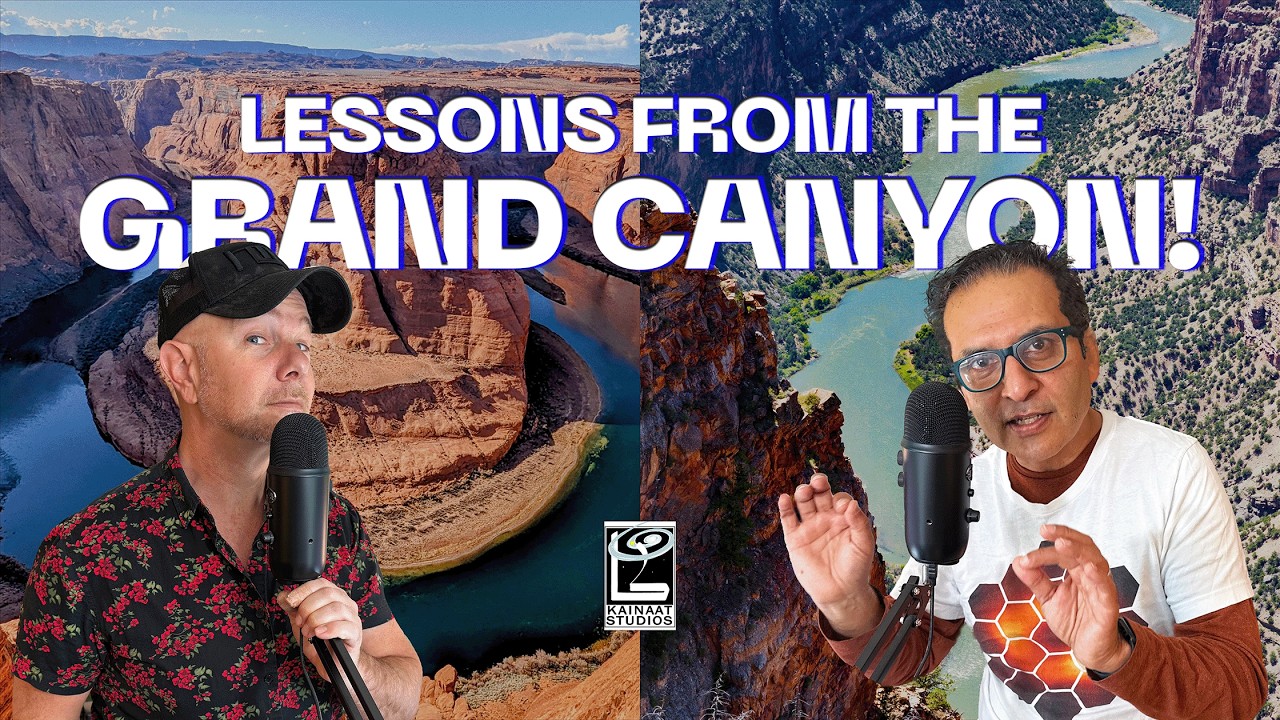
Lessons from the Grand Canyon! | Mr. Universe
We usually think of geology when it comes to the Grand Canyon. Indeed, it has one of most fascinating geologies in the world. But it is a National Park, a uniquely American idea for preserving natural areas for their wonder and ecological diversity, and for the enjoyment of the general public. Such a model can possibly be used on the Moon. However, the history of the Grand Canyon as depicted today ignores the treatment of Native Americans there, including the forced displacement of Havasupai as late as 1928. Mote and Salman talk about the geology, history and politics of Grand Canyon, as well as Antelope Canyon and Monument Valley. 00:00 Back from the Grand Canyon 02:29 Wonders of the World: Grand Canyon 07:42 Science of the Grand Canyon 12:32 Native Americans' History is Missing 16:00 Protection of National Parks 21:48 The Monument Valley 25:35 Clear Sky Resort near the Grand Canyon Also airing on The Fabulous 413 (NPR/NEPM) https://www.npr.org/podcasts/1155727495/the-fabulous-413 🔔 Join the Conversation Join Monte & Salman every week on Mr. Universe for bilingual (English + Urdu) conversations where science, cinema, and cosmic curiosity collide. 🌠 💬 Tell us in the comments: What’s your favorite alien movie of all time, and did it make you believe? #grandcanyon #historyofscience #Astronomy #nasa #esa #eso #space #KainaatiGupShup #ScienceExplained #SouthAsia #UrduScience #PhilosophyOfScience #SpaceEducation #ScientificMethod #astronomyadventures #sciencequestions #universe #jameswebbspacetelescope #hubblespacetelescope #documentary #spaceexploration #telescope For more information about Kainaat Studios: https://www.kainaatstudios.com/ Sign up to our mailing list to get unseen content and hear special announcements! https://www.kainaatstudios.com/newsletter Follow us for more: Facebook https://www.facebook.com/kainaatstudios Twitter https://twitter.com/KainaatStudios Instagram https://www.instagram.com/kainaatstudios/ TikTok https://www.tiktok.com/@kainaatstudios LinkedIn https://www.linkedin.com/company/kainaat Salman Hameed has a PhD in astronomy and is Charles Taylor Chair and Professor of Integrated Science & Humanities at Hampshire College, and a member of the Five College Astronomy Department (FCAD) in Massachusetts, USA. He is also the CEO of the non-profit Kainaat Studios Credits: Hosts: Monte Belmonte & Salman Hameed Editor: Shehryar Shaikh Music: "Gates of Gagashah" by Zohaib Kazi Images & Videos: NASA, Wikipedia, ESO, ESA, Around the World, Smithsonian Museum, Drone Snap, ESRI, PBS, PBS Terra, PBS Eons, Science Dawn, National Geographic, Western River Expeditions, Astrum, Be Smart and Atlas Pro Galactic Orbiters (Founding Supporters): Iqbal Family Foundation, Getz Pharma, Sahr Foundation, Dr. Zafar Iqbal & Dr. Mehr Iqbal, Khalid Mahmood, Qazi Family Foundation and PixelEdge Stellar Orbiters: AIIR Foundation, Ashraf Qazi, Aimen Khan, Slavena Emilova Molle and Abid & Farah Donation Fund Space Orbiters: Dr. Abdul Nadir, Dr. Asad Ansari, Dr. Salman Mallick, Dr. Tariq Hameed, Asif Alam, Zubair Faiz, Dr. Kamran Manzoor, Dr. Arsalan Malik, Junaid Qurashi, Adnan Siddiqui and Kashif Saeed Thank you to all our other monthly donors as well! If you wish to donate, please visit: https://www.kainaatstudios.com/donate
Play Video
Play Video
23:43
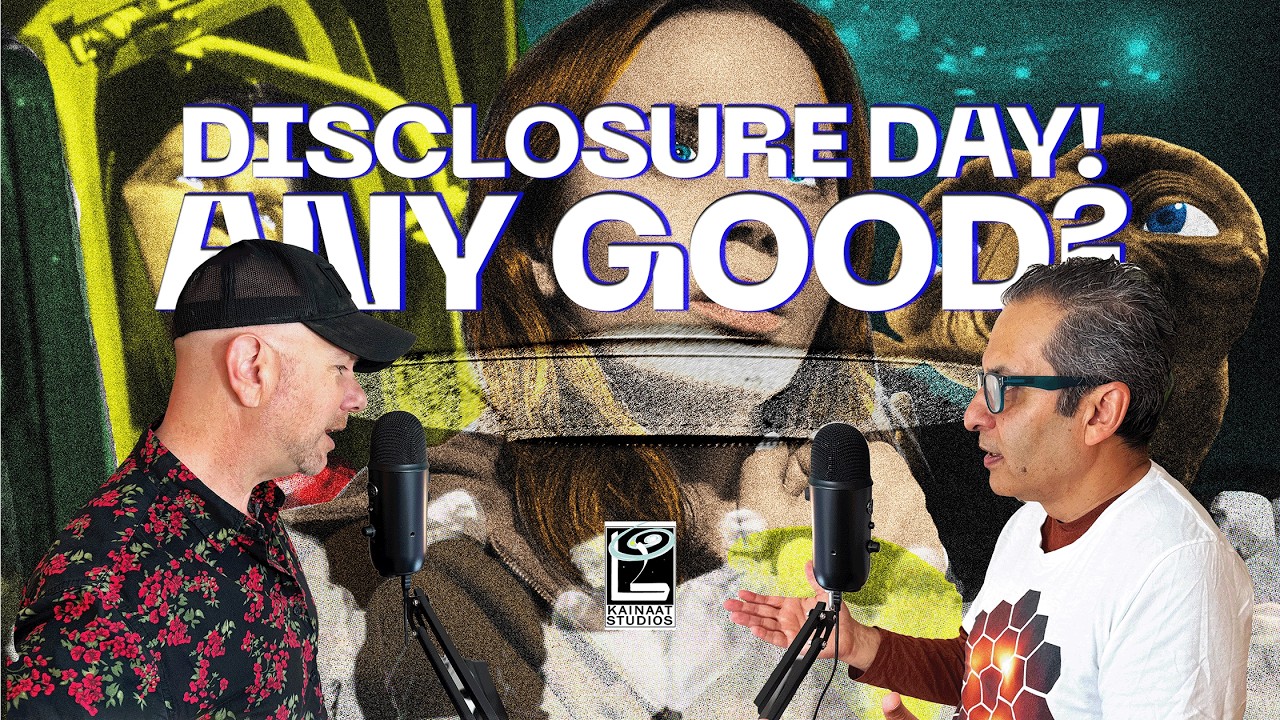
Is “Disclosure Day” any good? | Mr. Universe
🛸 The UFO Story Comes Back to Hollywood… For more than 80 years, UFOs, now often called UAPs (Unidentified Aerial Phenomena) have shaped pop culture, conspiracy theories, and even government investigations. Now, legendary filmmaker Steven Spielberg is returning to one of his favorite themes: aliens. And this time, he’s drawing from decades of UFO lore, eyewitness stories, and modern UAP controversies. But how much of it is science… and how much is myth? 👀✨ The answer may lie in something invisible that surrounds us all: Earth’s magnetic field. 🌍🧲 🎙️ In This Episode: Radio host Monte Belmonte and astrophysicist Dr. Salman Hameed dive into Steven Spielberg’s new alien film, unpacking its inspirations, the long history of UFO/UAP culture, and the scientific ideas behind extraterrestrial life. They ask a bigger question too: Can a UFO movie still capture wonder without falling into pseudoscience? And perhaps most importantly… is the movie actually good? 🎬👽 🌌 Why This Matters Alien stories don’t just entertain, they shape how generations think about science, mystery, and the unknown. From Close Encounters of the Third Kind to today’s UAP headlines, Hollywood has often blurred the line between evidence and imagination. This episode explores that tension, and why critical thinking matters when the sky gets strange. 🧠 What You’ll learn: 🛸 How UFO/UAP stories evolved over the last 80 years 🎥 How Steven Spielberg uses real UFO lore in his new film 👽 What modern science actually says about extraterrestrial life 🔍 How to separate compelling stories from extraordinary claims 🎬 Whether the new movie succeeds as both science fiction and storytelling 🌍 Perfect For: 👽 UFO and alien enthusiasts curious about the real science 🎬 Film lovers interested in sci-fi and Spielberg’s legacy 🧠 Viewers fascinated by pop culture, mythology, and skepticism 🔭 Astronomy fans who enjoy science through storytelling 📺 Urdu + English audiences looking for engaging edutainment 00:00 Introduction 01:00 What scientists think about Alien Life? 04:36 Congressional Testimony by David Grusch 09:39 Spielberg's Evolution from Jaws/ET to Disclosure Day 12:01 Not for Kids? The "Joy" was missing from it! 16:55 Cultural discussions UAPs in the Movie... 17:40 One Pro and One Con of the Movie! 20:30 Not much curiosity about Aliens? Also airing on The Fabulous 413 (NPR/NEPM) https://www.npr.org/podcasts/1155727495/the-fabulous-413 🔔 Join the Conversation Join Monte & Salman every week on Mr. Universe for bilingual (English + Urdu) conversations where science, cinema, and cosmic curiosity collide. 🌠 💬 Tell us in the comments: What’s your favorite alien movie of all time, and did it make you believe? #aliens #illegalimmigration #usairanwar #ice #stevenspielberg #disclosureday #ettheextraterrestrial #jaws #closeencountersofthethirdkind #cinematic #cinema #podcast #astronomynews #astronomyadventures #nasa #scientificdiscovery #xfiles #thetruthrevealed #hollywood #hollywoodmovies #kainaatigupshup #pakistan #salmanhameed #urdu #astronomydocumentary For more information about Kainaat Studios: https://www.kainaatstudios.com/ Sign up to our mailing list to get unseen content and hear special announcements! https://www.kainaatstudios.com/newsletter Follow us for more: Facebook https://www.facebook.com/kainaatstudios Twitter https://twitter.com/KainaatStudios Instagram https://www.instagram.com/kainaatstudios/ TikTok https://www.tiktok.com/@kainaatstudios LinkedIn https://www.linkedin.com/company/kainaat Salman Hameed has a PhD in astronomy and is Charles Taylor Chair and Professor of Integrated Science & Humanities at Hampshire College, and a member of the Five College Astronomy Department (FCAD) in Massachusetts, USA. He is also the CEO of the non-profit Kainaat Studios Credits: Hosts: Monte Belmonte & Salman Hameed Editor: Shehryar Shaikh Music: "Gates of Gagashah" by Zohaib Kazi Images: Wikipedia, IMDB, Universal Pictures, IMAX, USA.GOV, Fox Television, ABC & Five Colleges Astronomy Department Galactic Orbiters (Founding Supporters): Iqbal Family Foundation, Getz Pharma, Sahr Foundation, Dr. Zafar Iqbal & Dr. Mehr Iqbal, Khalid Mahmood, Qazi Family Foundation and PixelEdge Stellar Orbiters: AIIR Foundation, Ashraf Qazi, Aimen Khan, Slavena Emilova Molle and Abid & Farah Donation Fund Space Orbiters: Dr. Abdul Nadir, Dr. Asad Ansari, Dr. Salman Mallick, Dr. Tariq Hameed, Asif Alam, Zubair Faiz, Dr. Kamran Manzoor, Dr. Arsalan Malik, Junaid Qurashi, Adnan Siddiqui and Kashif Saeed Thank you to all our other monthly donors as well! If you wish to donate, please visit: https://www.kainaatstudios.com/donate
Load More
IAU Collaboration
Play Video
Play Video
22:32
How Serious is the Problem of Light Pollution? |IAU OAO - Kainaat| Cosmic Gup Shup
This video on the challenge of increasing light pollution is a part of collaboration between International Astronomical Union's Office for Astronomy Research (IAU OAO) and Kainaat Studios. A companion essay for this video is available at: https://www.iau.org/public/themes/light_pollution/ Stars in the night sky have played a crucial role in the history of humans on this planet. They have not only helped us in providing appropriate times for planting crops and in finding directions in the middle of deserts and oceans, but our queries about their nature have also sparked some of the biggest revolutions in human perceptions of our place in the universe. But now the increasing glow from our light bulbs is threatening the existence of various species on the planet. A new study suggests that the night sky may be brightening at a rate of 7-10% each year! In this episode of Cosmic Gup Shup, astrophysicist Salman Hameed talks about the steps we can take to reduce light pollution and protect the night sky, which holds an important place in various cultures and societies. For information on light pollution and the steps that you can take to help, please visit: International Dark Sky Association: https://www.darksky.org/ International Astronomical Union Commission: https://www.iau.org/public/themes/light_pollution/ IAU Light Pollution Brochure: https://www.iau.org/public/images/detail/light-pollution-brochure/ Papers mentioned in the video: Kyba et al. 2023: Citizen scientists report global rapid reductions in the visibility of stars from 2011 to 2022 https://www.science.org/doi/10.1126/science.abq7781 Fabian et al. 2023: Why flying insects gather at artificial light https://www.biorxiv.org/content/10.1101/2023.04.11.536486v1 Hamacher et al. 2020: Whitening the Sky: light pollution as a form of cultural genocide https://arxiv.org/abs/2001.11527 For more information about IAU OAO: https://www.iau.org/public/oao/ For more information about Kainaat Videos: https://www.kainaatstudios.com/ About the host: Salman Hameed has a PhD in astronomy and is Charles Taylor Chair and Professor of Integrated Science & Humanities at Hampshire College, and a member of the Five College Astronomy Department (FCAD) in Massachusetts, USA. He is also the CEO of the non-profit Kainaat Studios. Credits: Written & Hosted by: Salman Hameed Edited by: Shehryar Shaikh Music: “Kainaat” by Umer Piracha Subtitles by: DigiCircle Images: Wikipedia, NASA Major Support for Kainaat Studios Provided by: Sahr Foundation Dr. Zafar Iqbal & Dr. Mehr Iqbal PixelEdge Aimen Khan Slavena Emilova Molle AIIR Foundation Our Space Orbiter Donors for Kainaat Studios: Dr. Abdul Nadir Dr. Asad Ansari Dr. Salman Mallick Dr. Tariq Hameed Asif Alam Zubair Faiz Dr. Kamran Manzoor Dr. Arsalan Malik Thank you to all our other monthly donors as well! If you want to donate to the non-profit Kainaat Studios, please visit https://www.kainaatstudios.com/donate Chapters: 00:00 Introduction 01:05 IAU OAO - Collaboration 02:17 Cultural legacy of stars 05:12 Earth at night 06:10 Impact of light on animals 10:02 How bad is light pollution? 13:18 What can we do to reduce light pollution? 20:22 Conclusion
Play Video
Play Video
30:37
Connie Walker: What can we do about light pollution? |IAU OAO - Kainaat|
Here is a conversation about light pollution with Dr. Connie Walker. She is a Scientist at the US national center for optical-infrared astronomy (NSF’s NOIRLab). She is involved with light pollution issues on the ground and in space, coordinating NOIRLab’s Office of Observatory Site Protection. She directs Globe at Night, the international citizen-science program that rates night sky brightness. The conversation is hosted by the Director of International Astronomical Union's Office for Astronomy Outreach (IAU-OAO), Dr. Kelly Blumenthal, and the founder of Kainaat Studios, Dr. Salman Hameed. For information on light pollution and the steps that you can take to help, please visit: International Dark Sky Association: https://www.darksky.org/ International Astronomical Union Commission: https://www.iau.org/public/themes/light_pollution/ IAU Light Pollution Brochure: https://www.iau.org/public/images/detail/light-pollution-brochure/ Papers mentioned in the video: Kyba et al. 2023: Citizen scientists report global rapid reductions in the visibility of stars from 2011 to 2022 https://www.science.org/doi/10.1126/science.abq7781 For more information about IAU OAO: https://www.iau.org/public/oao/ For more information about Kainaat Videos: https://www.kainaatstudios.com/
Science & Society
Play Video
Play Video
01:09:41
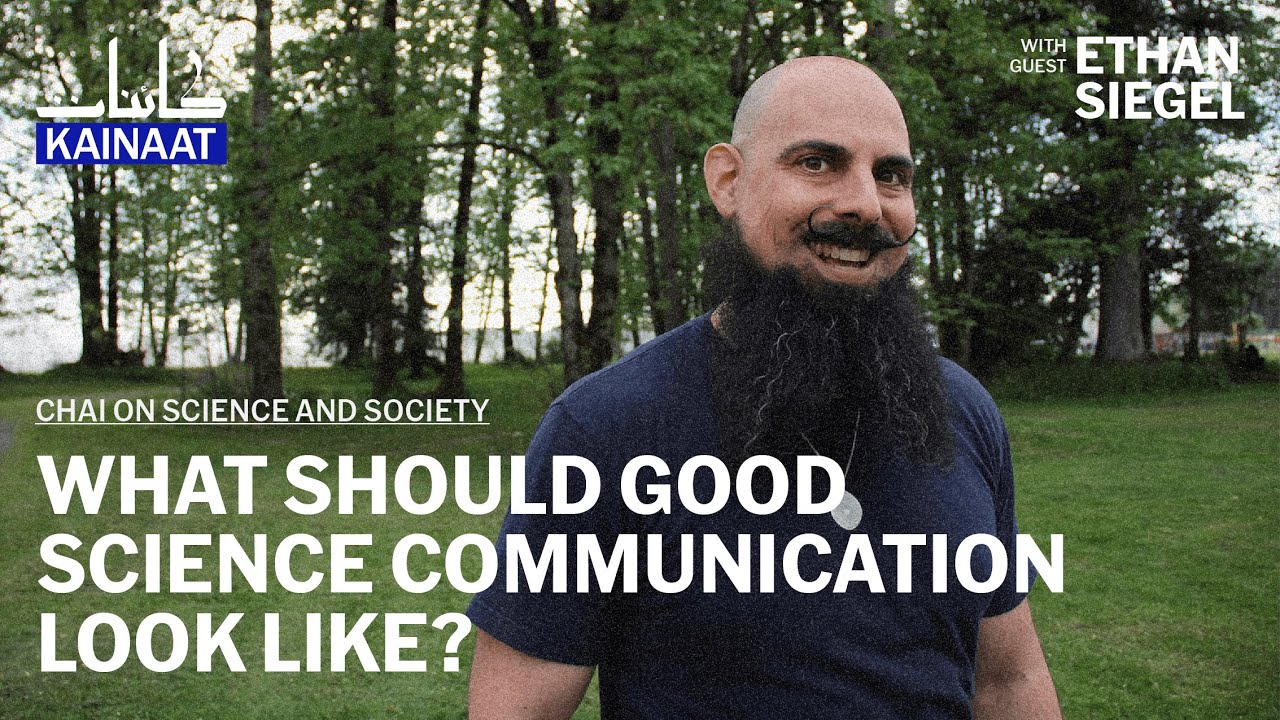
Ethan Siegel - What should good science communication look like?
Ethan Siegel is a Ph.D. astrophysicist and author of "Starts with a Bang!" (https://www.startswithabang.com/) He is a science communicator, who has taught physics and astronomy at various colleges. He has won numerous awards for science writing since 2008 for his blog, including the award for best science blog by the Institute of Physics. His two books "Treknology: The Science of Star Trek from Tricorders to Warp Drive" and "Beyond the Galaxy: How humanity looked beyond our Milky Way and discovered the entire Universe". Nisse Greenberg worked full time for The Story Collider, and has been involved in storytelling for 10 years now, teaching for The Moth and Story Collider as well as producing shows all over the place. https://nissegreenberg.com/ Salman Hameed has a PhD in astronomy and is Charles Taylor Chair and Professor of Integrated Science & Humanities at Hampshire College, and a member of the Five College Astronomy Department (FCAD) in Massachusetts, USA. He is also the CEO of the non-profit Kainaat Studios. You can find more information about Kainaat Studios here: https://www.kainaatstudios.com/ Reference articles: The humiliating truth behind Harvard astronomer’s “alien” spherules: https://bigthink.com/starts-with-a-bang/truth-harvard-astronomer-alien-spherules/ A science communicator’s 4 rules of persuasion https://bigthink.com/starts-with-a-bang/science-communicator-4-rules-of-persuasion/ Credits: Hosts: Nisse Greenberg & Salman Hameed Editor: Shehryar Shaikh Music: "Butterfly in Space" by Zohaib Kazi Support for Kainaat Studios is provided by: Galactic Orbiters (Founding Supporters): Sahr Foundation Qazi Family Foundation PixelEdge Stellar Orbiters: Dr. Zafar Iqbal & Dr. Mehr Iqbal Ashraf Qazi Aimen Khan Slavena Emilova Molle Abid & Farah Donation Fund AIIR Foundation Space Orbiters: Dr. Abdul Nadir Dr. Asad Ansari Dr. Salman Mallick Dr. Tariq Hameed Asif Alam Zubair Faiz Dr. Kamran Manzoor Dr. Arsalan Malik Junaid Qurashi Thank you to all our other monthly donors as well! If you want to donate, please visit https://www.kainaatstudios.com/donate Chapters: 00:00:00 - Intro 00:02:00 - Deciding factor on what to talk about 00:06:05 - How has it changed over the years 00:10:55 - Target Audience 00:18:55 - Difference in teaching to content creation 00:24:00 - Approach on a selected topic 00:31:08 - How science should be communicated 00:39:20 - Style of Science 00:45:31 - Responsible ways of doing science 00:48:00 - Translating scientific conflict to public 00:56:50 - What questions to ask 01:02:10 - Future of Science Communication
Play Video
Play Video
50:12
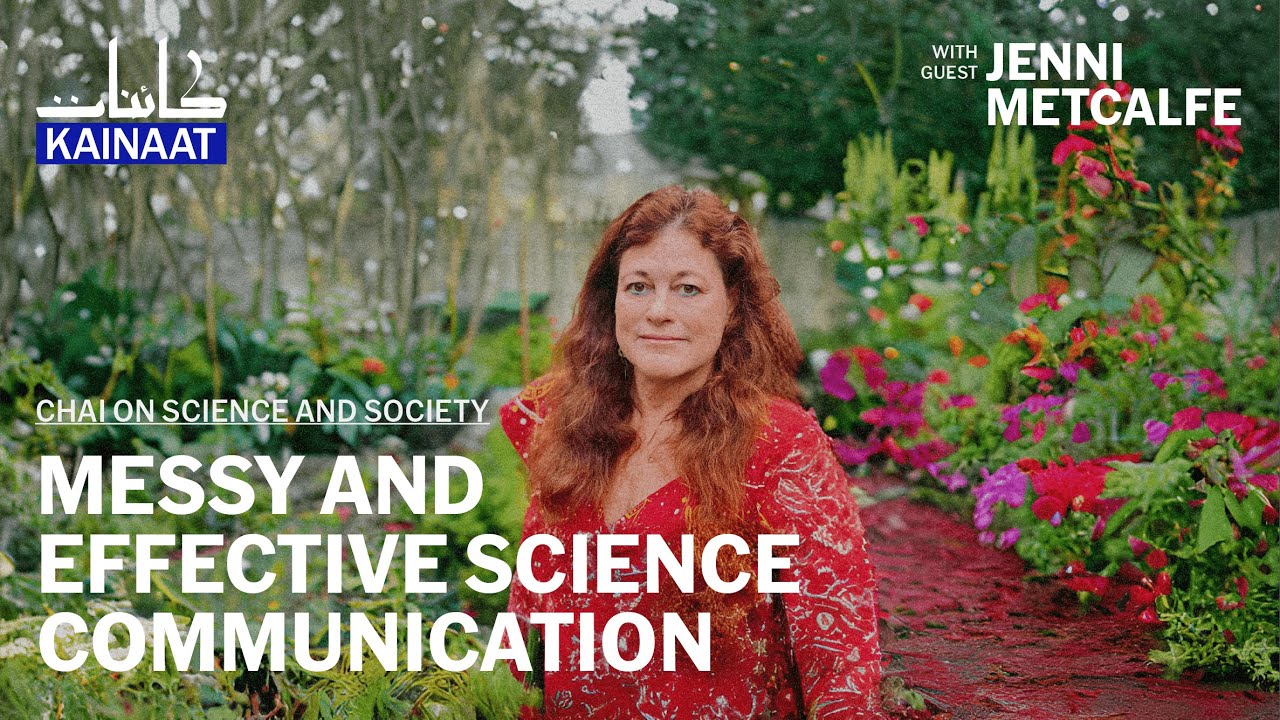
Jenni Metcalfe: Messy and Effective Science Communication
Guest: Dr Jenni Metcalfe is director of Econnect Communication, established in 1995. As a science communicator for more than 30 years, she has worked as a journalist, practitioner, university lecturer and researcher. She is the author of numerous research papers and book chapters on science communication. https://www.econnect.com.au/jenni-metcalfe/ Hosts: Nisse Greenberg worked full time for The Story Collider, and has been involved in storytelling for 10 years now, teaching for The Moth and Story Collider as well as producing shows all over the place. https://nissegreenberg.com/ Salman Hameed has a PhD in astronomy and is Charles Taylor Chair and Professor of Integrated Science & Humanities at Hampshire College, and a member of the Five College Astronomy Department (FCAD) in Massachusetts, USA. He is also the CEO of the non-profit Kainaat Studios. You can find more information about Kainaat Studios here: https://www.kainaatstudios.com/
Play Video
Play Video
49:10
James D. Lowenthal - Why You Should Care about the Dark? | International Dark Sky Week 2025 🌍✨
Light pollution is often overlooked — but it’s quietly transforming our world. As bright city lights drown out the stars, astronomers aren't the only ones who are affected. Wildlife behavior is disrupted, ecosystems are thrown off balance, and even human health is at risk. This International Dark Sky Week, we shed light on the importance of darkness. In this special episode of Chai on Science and Society, astrophysicist Salman Hameed sits down with James Lowenthal, the Mary Elizabeth Moses Professor of Astronomy at Smith College and a leading voice in the global movement to protect our night skies. Together, they explore: 🔭 How astronomical observations are compromised by increasing urban light 🦉 The surprising effects of artificial light on nocturnal animals, from birds to insects 🧬 The connection between light exposure and disrupted sleep cycles, mental health, and even hormonal imbalances in humans 🌃 What cities and individuals can do to reduce light pollution and restore natural darkness 🌌 Why reconnecting with the stars may be essential for our cultural and scientific imagination From skyglow to smart lighting solutions, and from grassroots advocacy to international dark-sky parks, this episode brings attention to a silent crisis — and how we can all be part of the solution. 🌌 International Dark Sky Week 2025 is a global event held from April 20 to April 26, dedicated to raising awareness about light pollution, protecting night skies, and promoting astronomy and environmental conservation. Founded by DarkSky International, this annual event invites communities around the world to turn off unnecessary lights, enjoy stargazing, and learn how artificial light affects wildlife, ecosystems, and human health. 🌠✨ Join us in celebrating International Dark Sky Week 2025 by learning how the preservation of darkness can bring brighter outcomes for our planet. Here is Professor Lowenthal's extensive resource on light pollution: https://www.science.smith.edu/~jlowenth/lightpollution/lightpollution.html For International Dark Sky Week: https://idsw.darksky.org/ For information on light pollution and the steps that you can take to help, please visit: International Dark Sky Association: https://www.darksky.org/ International Astronomical Union Commission: https://www.iau.org/public/themes/lig... IAU Light Pollution Brochure: https://www.iau.org/public/images/det... #darksky #lightpollution #astronomynews #stargazing #nightsky #preservation #ecotourism #wildlifeconservation #podcast #astronomyadventures #astrophysics #environmentalawareness #environmentalprotection #environmentalscience #environmentalimpact #darkyskyweek #JamesLowenthal #urdu Salman Hameed has a PhD in astronomy and is Charles Taylor Chair and Professor of Integrated Science & Humanities at Hampshire College, and a member of the Five College Astronomy Department (FCAD) in Massachusetts, USA. He is also the CEO of the non-profit Kainaat Studios. You can find more information about Kainaat Studios here: https://www.kainaatstudios.com/ Credits: Host: Salman Hameed Guest: James Lowenthal Editor: Shehryar Shaikh Music: "Butterfly in Space" by Zohaib Kazi Support for Kainaat Studios is provided by: Galactic Orbiters (Founding Supporters): Sahr Foundation Qazi Family Foundation PixelEdge Stellar Orbiters: Dr. Zafar Iqbal & Dr. Mehr Iqbal Ashraf Qazi Aimen Khan Slavena Emilova Molle Abid & Farah Donation Fund AIIR Foundation Space Orbiters: Dr. Abdul Nadir Dr. Asad Ansari Dr. Salman Mallick Dr. Tariq Hameed Asif Alam Zubair Faiz Dr. Kamran Manzoor Dr. Arsalan Malik Junaid Qurashi Thank you to all our other monthly donors as well! If you want to donate, please visit https://www.kainaatstudios.com/donate Chapters: 00:00 - Intro 02:00 - Importance of seeing the Milky Way 08:59 - Dark Sky International week 14:12 - Dedicated Dark Sky places 18:17 - Astro tourism 20:15 - Environmental issue 27:13 - Light's impact on the ecosystem 35:02 - Measures to reduce light pollution 37:28 - Balance of Safety and lights 41:53 - Dark sky week awareness
Play Video
Play Video
22:05
Ryan MacDonald - K2-18b and the Search for Life: Exciting Discovery or a False Alarm? 🌎🛸
A recent study made headlines worldwide, suggesting the detection of dimethyl sulfide — a potential sign of life — in the atmosphere of K2-18b, an exoplanet located 124 light-years away. But the scientific community isn't fully convinced yet. The discovery has sparked an intense and ongoing debate about how we interpret such distant data and what really qualifies as evidence for alien life 🌎🛸 In this episode of Chai on Science and Society, astrophysicist Salman Hameed is joined by Dr. Ryan MacDonald, a Sagan Fellow at the University of Michigan. Dr. MacDonald is an expert on exoplanet atmospheres, combining cutting-edge observational astronomy with theoretical modeling, particularly atmospheric retrieval techniques. Together, they dive deep into the claims, discuss why skepticism is healthy for scientific progress, and explore the exciting future of exoplanet research with telescopes like the James Webb Space Telescope (JWST). If you're fascinated by the search for life beyond Earth, exoplanet science, and the latest discoveries from JWST, you won't want to miss this insightful conversation! 🔭✨ #exoplanets #astrobiology #k218b #biosignature #spacediscovery #nasa #esa #cambridge #aliens #extraterrestrial #life #astronomynews #jameswebbspacetelescope #sciencecommunication #astrophysics #podcast #astronomyadventures #urdu For more information, please visit Dr. Ryan Macdonad's website: https://distantworlds.space Original paper about possible biosignature in K2-18b: The Astrophysical Journal Letters, Volume 983, Number 2 https://iopscience.iop.org/article/10.3847/2041-8213/adc1c8 Salman Hameed has a PhD in astronomy and is Charles Taylor Chair and Professor of Integrated Science & Humanities at Hampshire College, and a member of the Five College Astronomy Department (FCAD) in Massachusetts, USA. He is also the CEO of the non-profit Kainaat Studios. You can find more information about Kainaat Studios here: https://www.kainaatstudios.com/ Credits: Host: Salman Hameed Guest: Ryan MacDonald Editor: Shehryar Shaikh Music: "Butterfly in Space" by Zohaib Kazi Support for Kainaat Studios is provided by: Galactic Orbiters (Founding Supporters): Sahr Foundation Qazi Family Foundation PixelEdge Stellar Orbiters: Dr. Zafar Iqbal & Dr. Mehr Iqbal Ashraf Qazi Aimen Khan Slavena Emilova Molle Abid & Farah Donation Fund AIIR Foundation Space Orbiters: Dr. Abdul Nadir Dr. Asad Ansari Dr. Salman Mallick Dr. Tariq Hameed Asif Alam Zubair Faiz Dr. Kamran Manzoor Dr. Arsalan Malik Junaid Qurashi Thank you to all our other monthly donors as well! If you want to donate, please visit https://www.kainaatstudios.com/donate Chapters: 00:00 - Intro 01:05 - Potential Bio-signatures at K2-18b 06:35 - Ocean on the planet? 08:55 - 3 Sigma detection 13:25 - Raw data analysis 15:24 - Chances of 5 sigma results 18:40 - molecules to reach 5 sigma detection
Load More
bottom of page